


Can You Really Change the World Starting With One Choice?
The world feels broken, but what if the solution isn’t out there—it’s within you? Every thought, every reaction, every choice shapes…

 Illegal immigration to the United States has long been a subject of heated debate. Some argue that immigrants take jobs away from Americans, commit crimes, traffic drugs and unduly strain social welfare programs but pay no taxes.
 Cities and states fork over an estimated $70 billion each year to large companies that don’t need public assistance to thrive. We could spend that money on our own neighborhoods.
 Marissa Mayer tells us a lot about why Americans are so angry, and why anti-establishment fury has become the biggest single force in American politics today.
 We now have dozens of smart devices in our houses and even on our bodies. They improve our lives in so many ways – from lowering energy consumption in our homes to egging us on to be active.
 Wealth inequality is even more of a problem than income inequality. That’s because you have to have enough savings from income to begin to accumulate wealth – buying a house or investing in stocks and bonds, or saving up to send a child to college.
!["Even if we can't change the immigration policies or prevent raids from happening, people should know that they can access [government] services," says Daniel Kruger. (Credit: @ICEgov/Twitter)](/images/2016/540/immigration_raids-4-15.jpg) "Even if we can't change the immigration policies or prevent raids from happening, people should know that they can access [government] services," says Daniel Kruger.
"Even if we can't change the immigration policies or prevent raids from happening, people should know that they can access [government] services," says Daniel Kruger.
 In an election year, we hear endless promises of what our politicians will do to help the people. But are the ideas we’re hearing from Bernie Sanders and others—like Medicare for all, free college tuition, paid family leave—just slogans to pander to voters suffering under stagnating wages and burdensome debt? Could those ideas ever actually take hold?
 The tax dealings of a number of politicians have come under scrutiny this week, following news of their offshore holdings in the Panama Papers. The leaks have led to the resignation of the Icelandic prime minister – and the UK prime minister, David Cameron, has been criticised for shares he used to have in an offshore fund set up
 More than 90 people are killed by guns every day in the United States. In 2013, there were 33,636 gun deaths in the US. Civilians own approximately 270 million guns, roughly one “for every man, woman, and child,” as President Obama noted in an address to the nation in the wake of the shooting rampage at an Oregon community college last October that left 10 dead.

The FBI has succeeded in hacking into an iPhone that belonged to San Bernardino shooter Syed Farook without Apple’s help. As a consequence, the FBI has dropped its legal case that was trying to force Apple...
 The range and number of “things” connected to the internet is truly astounding, including security cameras, ovens, alarm systems, baby monitors and cars. They’re are all going online, so they can be remotely monitored and controlled over the internet.
 Prison reform advocates see signs of hope in recent federal and state actions that alter the way young adults are incarcerated. “The president’s decision was an enormous display of moral leadership.”Last week, the Kansas State Senate passed a bill to revamp its juvenile justice system.
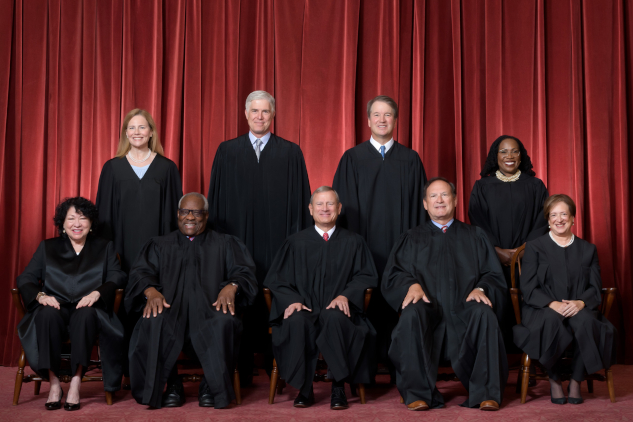
The underrepresentation of women in political and civic life raises questions about the effects of their inclusion in decision-making roles. A study examining the introduction of female jurors in England reveals significant changes in conviction rates, particularly for sex offenses, highlighting the potential influence of female perspectives in judicial outcomes.
 “You have nothing to fear if you have nothing to hide” is an argument that is used often in the debate about surveillance.
 Apple has been ordered to help FBI investigators access data on the phone belonging to San Bernardino gunman Syed Rizwan Farook. The technical solution proposed by the FBI appears to undermine Apple’s earlier claim that they would be unable to help.
 It’s a common assumption that being online means you’ll have to part ways with your personal data and there’s nothing you can do about it.
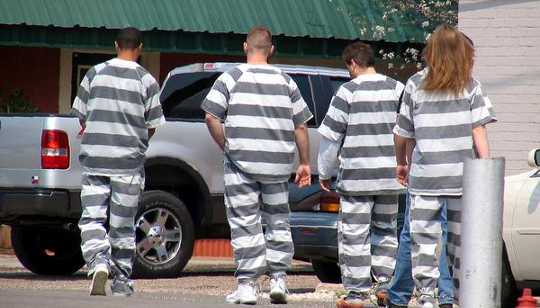 It's no secret that the United States prison system is a failure. Dismal statistics abound about the growing prison population. Despite having only 5 percent of the world's population, the United States incarcerates a quarter of the world's prisoners, according to the Economist.
 Low-wage workers nationwide have been campaigning for a $15 hourly "living wage" and the right to organize without employer labor law-breaking. But a new think tank report says that in most states, $15 is not enough - even for one person.
 How much does your smart home know about you? That was the question that Charles Givre, a data scientist at Booz Allen Hamilton, set out to answer in a recent experiment. Givre has an account on Wink, a platform designed to control, from a single screen, his Internet-connected home devices, such as door locks, window shades and LED lights.
 Verizon is giving a new mission to its controversial hidden identifier that tracks users of mobile devices. Verizon said in a little-noticed announcement that it will soon begin sharing the profiles with AOL's ad network, which in turn monitors users across a large swath of the Internet.
 I’ve had so many calls about an article appearing earlier this week in the Wall Street Journal – charging that Bernie Sanders’s proposals would carry a “price tag” of $18 trillion over a 10-year period – that it’s necessary to respond.
 EU’s economic demands seek to derail small business and local communities, paving the way for multinational corporate giants. One demand is that Greece abolish any laws restricting the days or hours a business can operate despite the fact that several European countries including have enacted such policies to protect workers and small business, including Germany.
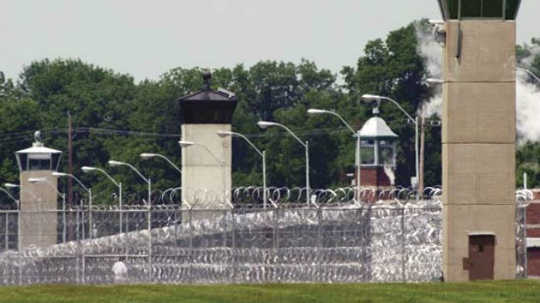 In recent years, an increasingly bipartisan consensus around prison reform has begun to take shape, uniting policymakers in Congress who are typically on opposite sides of law-and-order issues